Abstract
Modern foodservice operators face growing pressure to align daily operational supplies with global environmental protection standards, and Home compostable cup sleeves for restaurants emerge as a low-barrier, high-impact packaging upgrade for cafes, casual diners, catering teams and hotel beverage stations. This writing breaks down the core environmental advantages of fully home-compostable corrugated fiber sleeves, contrasts their performance against conventional plastic-lined paper alternatives, explains standardized forestry sourcing rules, and clarifies international certification frameworks that validate biodegradation capacity. The content avoids financial metrics and focuses on long-term ecological value, customer perception improvement, and simplified back-of-house waste management workflows, with clear structural separation across sourcing, manufacturing, real-world service scenarios, compliance credentials and frequently asked operational questions.
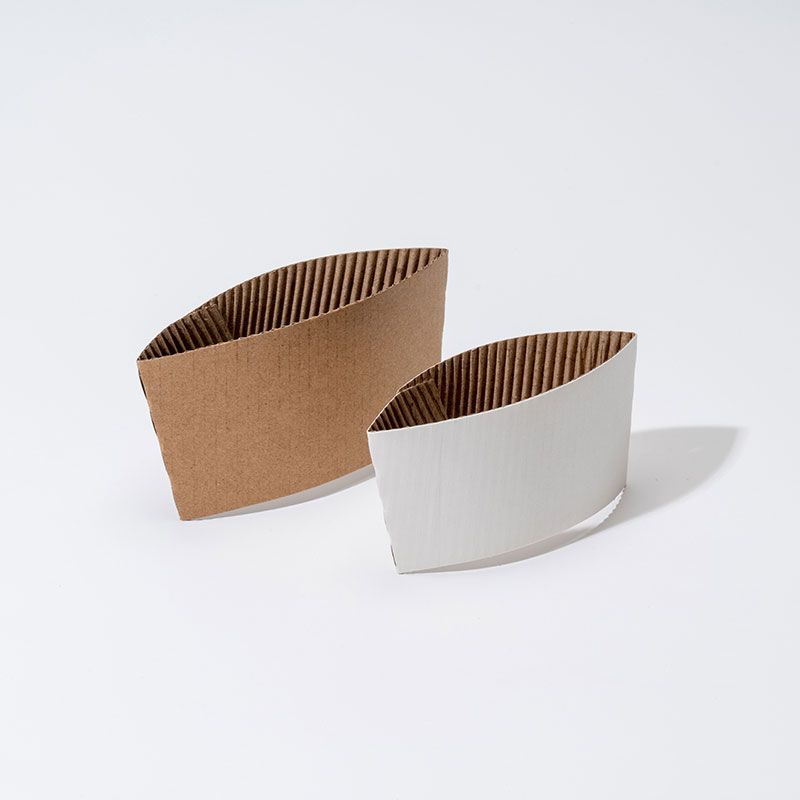
Table of Contents (Click each link to jump to corresponding section)
- 1. Core Environmental Value Delivered By Home compostable cup sleeves for restaurants
- 2. Multi-Scenario Service Compatibility Across All Restaurant Operating Modes
- 3. Traceable, Responsible Fiber Sourcing That Reinforces Eco Credibility
- 4. Low-Waste Automated Production Process With Food-Grade Raw Materials
- 5. Global Compliance Certifications For Cross-Border Foodservice Deployment
- 6. Frequently Asked Operational Questions From Restaurant Procurement Teams
- 7. Sustainable Packaging Next Steps For All Beverage-Focused Dining Venues
1. Core Environmental Value Delivered By Home compostable cup sleeves for restaurants
Traditional disposable cup accessories carry hidden ecological harm that many foodservice teams overlook during routine procurement planning. Standard paper cup sleeves often contain thin polyethylene coating to resist moisture, a composite material that cannot separate naturally during waste breakdown cycles. Mixed fiber-and-plastic construction forces waste sorting staff to isolate sleeves from organic scraps, creating higher contamination rates within municipal compost collection streams and limiting the amount of organic material that can transform into nutrient-rich soil.
The single-material corrugated fiber construction used for Home compostable cup sleeves for restaurants eliminates composite component barriers to natural decomposition, marking a fundamental shift in how beverage packaging interacts with planetary waste systems. Unlike industrial-only compostable packaging variants that demand sustained high-temperature facilities ranging from 55 to 70 degrees Celsius, this line of sleeves undergoes full mineralization within ordinary backyard compost piles without specialized commercial compost infrastructure. Independent third-party laboratory testing confirms complete breakdown within 180 days under regular residential compost conditions, leaving zero microplastic fragments or toxic chemical residues embedded in finished compost soil.
1.1 Streamlined Organic Waste Handling For Front And Back Of House Staff
A consistent pain point for restaurant teams managing zero-waste initiatives centers on complicated sorting protocols for disposable beverage accessories. Composite coated sleeves cannot share collection bins with coffee grounds, fruit peels, leftover baked goods and other food waste, requiring separate labeled receptacles and repeated staff training to avoid cross-contamination.
- Single-fiber composition removes mandatory separation steps between sleeves and organic food scraps
- Uniform compost compatibility cuts down staff training time for waste sorting procedures
- Lower contamination percentages improve local compost program participation eligibility
- Unified organic waste bins reduce the number of collection containers required on dining floors
1.2 Customer Perception Alignment With Global Eco-Consumer Trends
Contemporary diners actively prioritize foodservice brands that implement tangible environmental action rather than surface-level green marketing messaging. Visible use of fully home-compostable beverage packaging creates an immediate visual signal that a venue prioritizes measurable sustainability progress over vague corporate environmental statements. Younger consumer demographics consistently express preference for dining locations that adopt verifiable biodegradable supplies, with many patrons sharing positive venue experiences across social media platforms specifically highlighting eco-friendly packaging choices.
2. Multi-Scenario Service Compatibility Across All Restaurant Operating Modes
Beverage service workflows vary drastically across distinct foodservice formats, and sustainable packaging solutions must maintain uniform functional performance without sacrificing environmental integrity across every operating environment. The corrugated layered structure built into home-compostable cup sleeves delivers thermal insulation and anti-slip grip properties that hold consistent reliability from quiet fine-dining table service to high-volume rush-hour counter operations and off-site catering events.
2.1 Fine Dining And Full Table Service Environments
Upscale restaurants prioritize subtle, polished small details that elevate guest comfort without disrupting curated table aesthetics. Two base color variants—natural unbleached kraft and clean matte white—match opposing interior design directions within premium dining spaces. Natural kraft sleeves complement farm-to-table, rustic and organic-focused restaurant concepts, while solid white sleeves integrate seamlessly with minimalist, contemporary and luxury venue decor schemes. Pre-fitted sleeves placed on hot beverage cups eliminate accidental scalding moments for seated guests, demonstrating attentive service planning without distracting from refined table presentation layouts.
2.2 High-Volume Counter Service And Independent Cafes
Rapid customer throughput during morning coffee rushes creates strict efficiency demands for disposable packaging accessories. Precision pre-creased folding lines engineered into each sleeve allow baristas and counter attendants to wrap sleeves around paper cups in seconds, preventing extended service lines during peak operating windows. The rigid corrugated fiber structure resists bending and deformation under fast assembly motions, eliminating wasted sleeves damaged during rushed beverage preparation cycles.
2.3 Off-Site Catering, Corporate Functions And Wedding Events
Flat-packed sleeve shipments minimize transportation volume for off-location service events, reducing carbon emissions linked to delivery logistics for catering teams. Many venue management companies and corporate event planners enforce strict compostable packaging rules for on-site beverage service, creating mandatory eco-supply requirements for third-party catering vendors. Deploying fully home-compostable sleeves removes compliance friction for catering teams bidding on institutional, wedding and corporate hospitality contracts.
2.4 Dual Functionality For Hot And Iced Beverage Service
While primary design targets hot coffee, tea and cocoa service, the layered corrugated fiber absorbs surface condensation generated by cold iced drinks, creating non-slip exterior grip for frosty beverage cups. The moisture absorption capacity eliminates slippery cup surfaces caused by chilled drink condensation, reducing accidental cup spills across all beverage temperature categories without compromising long-term compost breakdown capacity.
3. Traceable, Responsible Fiber Sourcing That Reinforces Eco Credibility
Complete sustainability verification for disposable packaging extends beyond end-of-life biodegradation performance to cover every upstream production stage, starting with forest raw material harvesting. Reputable manufacturers eliminate unregulated fiber sources linked to illegal logging, biodiversity loss and indigenous community land disputes by exclusively utilizing forestry stock certified by globally recognized third-party forest stewardship organizations.
- All corrugated fiber stock originates from FSC-certified forest management zones
- Harvest protocols protect native wildlife habitats and preserve natural forest biodiversity
- Supply chain documentation tracks fiber batches from harvesting site to finished sleeve production
- Raw material testing removes contaminated recycled fiber and synthetic chemical fillers
3.1 Batch Consistency Testing For Uniform Structural Durability
Each incoming roll of corrugated fiber undergoes standardized lab assessment before entering automated manufacturing lines, with testing protocols evaluating tensile strength, sheet thickness uniformity, fiber purity and moisture resistance. Strict pre-production quality screening prevents inconsistent sleeve durability across bulk order shipments, eliminating weak, easily torn sleeves that fail during daily foodservice use. Rigorous raw material oversight allows finished sleeves to balance lightweight compostable construction with commercial-grade structural stability unavailable from low-cost untested fiber alternatives.
3.2 Chemical Additive Restrictions To Preserve Compostability Standards
Many budget paper sleeve manufacturers integrate synthetic binders, plastic strengthening fillers and moisture-blocking chemical coatings to extend short-term product lifespan, yet these additives block natural decomposition cycles and introduce micro-contaminants into finished compost. The fiber stock selected for these sleeves contains zero synthetic plastic additives, non-food-safe chemical treatments or petroleum-based binders, ensuring unobstructed full biodegradation without compromising food contact safety for hot beverage service.
4. Low-Waste Automated Production Process With Food-Grade Raw Materials
Sustainable packaging credibility cannot rely solely on end-product biodegradation; factory manufacturing workflows must also minimize resource waste and harmful industrial emissions to maintain complete environmental integrity across the entire product lifecycle. Automated production infrastructure removes human error variables that generate excess material scrap, while water-based printing systems eliminate volatile organic compound release associated with solvent ink branding alternatives.
4.1 Zero-Waste Scrap Recycling Protocols Within Manufacturing Facilities
Trimmings, die-cut offcuts and unused fiber sheet fragments generated during sleeve forming processes are fully collected and reintroduced back into the raw paper supply chain, eliminating factory solid waste sent to landfill disposal sites. Closed-loop scrap recycling reduces overall forest fiber consumption per unit of finished sleeve output, amplifying the upstream environmental benefits of responsible forest sourcing practices.
4.2 Food-Safe Water-Based Custom Brand Printing
Custom venue logo and graphic printing options utilize exclusively food-contact approved water-based inks that break down synchronously alongside corrugated fiber during home compost cycles. Solvent-based inks common within low-cost printed packaging contain toxic volatile compounds that contaminate finished compost and invalidate third-party biodegradation certifications. Water-based ink application maintains full home-compostable certification status even on fully branded custom sleeves, removing concerns that personalized marketing graphics disrupt natural decomposition processes.
4.3 Automated Quality Control For Uniform Finished Product Standards
Every production stage—roll slitting, crease forming, graphic printing, die cutting and sleeve bonding—integrates automated sensor quality checks that measure dimensional accuracy, crease depth, adhesive bond strength and print alignment consistency. Post-production structural testing uses hydrostatic pressure and air compression equipment to verify thermal insulation and tear resistance before bulk order packaging, ensuring uniform functional performance across every unit shipped to foodservice venues.
5. Global Compliance Certifications For Cross-Border Foodservice Deployment
Multi-location restaurant groups and international catering brands require packaging supplies validated against regional regulatory frameworks for food safety, biodegradation and ethical labor standards. A comprehensive portfolio of independent third-party certifications removes compliance uncertainty for venues operating across North America, Europe, Asia and Oceania, providing verifiable documentation to back public sustainability messaging shared with guests and local environmental regulators.
| Certification Name | Core Verification Scope | Primary Regional Application |
|---|---|---|
| ABA Home Compostable | Full biodegradation under residential compost conditions within 180 days | Global consumer-facing sustainability marketing validation |
| BPI Compostable | Industrial and residential compost breakdown compliance standards | North American municipal compost regulatory alignment |
| BRC Food Contact Safety | HACCP factory hygiene, traceability and food-contact material safety | International commercial foodservice venue requirements |
| FSC Forest Sourcing | Responsible, deforestation-free raw fiber harvesting rules | EU, Australian and North American eco-brand compliance |
| Sedex Ethical Production | Fair labor standards, workplace safety and equitable factory practices | Global corporate social responsibility procurement rules |
| PHA Marine Biodegradable | Safe breakdown if packaging enters aquatic marine environments | Coastal foodservice and waterfront hospitality venues |
5.1 Cross-Region Regulatory Alignment Benefits For Multi-Branch Restaurant Chains
Venue operators managing locations across multiple national territories face fragmented packaging compliance rules that complicate unified bulk procurement. Packaging carrying overlapping international certification sets eliminates the need to source separate sleeve variants for different regional branches, streamlining centralized supply chain management and standardizing sustainable packaging messaging across all brand locations worldwide.
6. Frequently Asked Operational Questions From Restaurant Procurement Teams
1. What key differences separate home compostable packaging from industrial-only compostable alternatives?
Industrial compostable packaging relies on sustained heat levels between 55 and 70 degrees Celsius found exclusively inside commercial municipal compost facilities to complete full decomposition. Home compostable variants validated via ABA certification break down naturally at lower ambient temperatures within standard backyard compost piles, without requiring access to specialized industrial waste treatment infrastructure. Both variants remain safe for commercial compost collection streams where local municipal programs operate.
2. Can discarded sleeves be placed within general landfill waste bins if compost collection access is unavailable?
Sleeves will biodegrade significantly faster than plastic-lined paper alternatives inside landfill environments, yet maximum ecological value only activates when placed within dedicated organic compost collection streams. Venue teams can reduce landfill waste impact by labeling clear compost bins and sharing brief educational guidance with guests to encourage proper sorting behavior.
3. Do custom printed venue logos invalidate existing compostable certification credentials?
Custom graphics printed with food-grade water-based inks do not disrupt biodegradation performance or void ABA and BPI certification standards. The ink formulation breaks down concurrently with corrugated fiber material during compost cycles, retaining identical home-compostable properties as unprinted blank sleeve stock.
4. Is there a minimum order quantity difference between natural kraft and white matte sleeve color options?
Both base color stock variants carry identical minimum order volume requirements, with no pricing or order volume differentiation between the two finishes. Bulk orders can also split quantities across the two color options to match mixed venue aesthetic needs without adjusting minimum purchase thresholds.
Advance Venue Sustainability Goals With Verified Compostable Beverage Packaging
Fully traceable, third-party certified sustainable foodservice packaging creates long-term ecological value while simplifying daily operational workflows for every style of dining venue. Want Paper maintains automated low-waste manufacturing lines and comprehensive cross-border certification portfolios to support consistent eco-packaging supply for global foodservice operators.
Venue procurement teams seeking custom sizing, branded printing details and full certification documentation can explore tailored sustainable packaging solutions by connecting directly with the production team.
contact us to discuss customized compostable sleeve packaging solutions